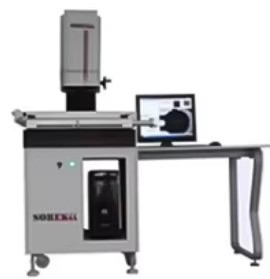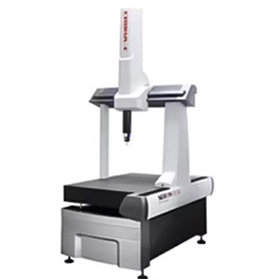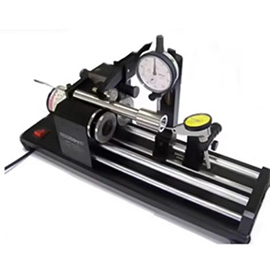
roundness measuring instrument
A Roundness Measuring Instrument is a specialized tool designed to accurately check the roundness of circular or cylindrical workpieces—such as shafts, bearings, and pipes. Roundness, a key geometric parameter, directly affects how well parts fit and perform in machinery. This instrument ensures components meet design standards, reducing assembly issues and improving product reliability.
How It Works
The instrument operates on a simple yet precise principle. It uses a high-sensitivity probe (contact or non-contact) to scan the outer or inner surface of a rotating workpiece. As the workpiece spins (usually driven by a stable rotary table), the probe detects tiny deviations from a perfect circle. These deviations are converted into digital data, which is then processed by built-in software. The result is a clear roundness value (e.g., in micrometers) and often a visual graph (like a polar plot) showing the surface profile—making it easy to identify irregularities.
Key Advantages
High Accuracy: It can detect deviations as small as 0.1 micrometers, ensuring even minor flaws in roundness are caught—critical for high-precision parts like engine bearings.
User-Friendly Operation: Most models feature intuitive interfaces and one-click measurement modes. Even operators with basic training can complete tests quickly, without complex setup.
Versatile Application: It works with various materials (metal, plastic, ceramic) and workpiece sizes—from small electronic components (e.g., connector pins) to large industrial pipes.
Fast Results: Measurements are completed in seconds to minutes, unlike manual methods that take longer and are prone to human error. This speeds up quality control processes in production lines.