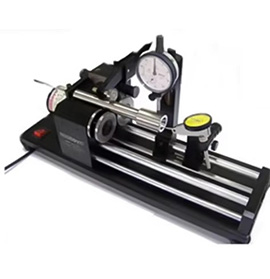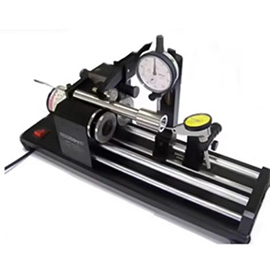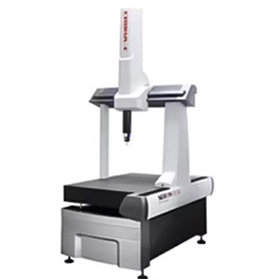
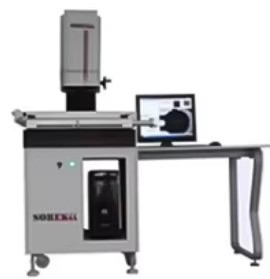
Machining Precision Measuring Instrument
Product Introduction: Machining Precision Measuring Instrument
In the modern manufacturing landscape, where even micron-level deviations can compromise product performance and market competitiveness, the Machining Precision Measuring Instrument emerges as an indispensable core tool for quality control and process optimization. Designed to cater to the rigorous demands of aerospace, automotive, mold-making, precision engineering, and other high-precision industries, this instrument redefines accuracy, efficiency, and reliability in machining measurement.
1. Core Value: Precision That Drives Manufacturing Excellence
At its core, this instrument is engineered to deliver unmatched measurement accuracy, addressing the critical need to verify dimensional compliance of machined components—from complex parts like turbine blades and automotive engine cylinders to small-scale precision parts such as electronic connectors. By eliminating human error and minimizing environmental interference, it ensures that every measured data point reflects the true geometric characteristics of the workpiece, laying a solid foundation for consistent product quality and reduced rework rates.
2. Key Technical Features
① High-Resolution Sensing & Advanced Measurement Technology
Equipped with high-precision optical sensors (e.g., laser displacement sensors, CCD cameras) or contact-type probes (such as ruby-tipped touch probes), the instrument achieves a measurement resolution of up to 0.1 μm and repeatability within ±0.5 μm. This level of precision enables it to detect even the smallest deviations in dimensions, flatness, straightness, concentricity, and surface roughness—critical parameters for high-performance machined parts.
② Versatile Measurement Capabilities
It supports multi-dimensional measurement of both simple and complex workpieces:
2D Measurement: Quickly verify lengths, angles, radii, and distances of planar components.
3D Measurement: Capture 3D geometric data of irregular parts (e.g., mold cavities, curved surfaces) via 3-axis or 5-axis motion systems, enabling comprehensive shape analysis.
Customizable Protocols: Pre-set measurement templates for common parts (e.g., bolts, gears) reduce setup time, while flexible software allows users to create custom workflows for unique components.
③ Smart Software & Data Integration
The instrument is paired with intuitive, industry-compliant measurement software that offers:
Real-time data visualization (e.g., 3D models, tolerance charts) for instant result interpretation.
Automated data analysis, including tolerance deviation calculations and pass/fail judgments, to streamline quality inspection processes.
Seamless integration with ERP (Enterprise Resource Planning) or MES (Manufacturing Execution System) platforms, enabling traceable data storage and process optimization based on historical measurement trends.
④ Robust Design for Industrial Environments
Built to withstand the harsh conditions of manufacturing floors, the instrument features:
A vibration-dampened granite base that minimizes the impact of external vibrations on measurement accuracy.
Dustproof and waterproof enclosures (IP54 or higher rating) to protect internal components from coolant, oil, and debris.
Stable temperature compensation technology that adjusts for ambient temperature fluctuations (5°C–40°C), ensuring consistent performance in varying workshop environments.
3. Application Scenarios
This Machining Precision Measuring Instrument is widely used across industries where precision is non-negotiable:
Aerospace: Measuring turbine disks, aircraft structural parts, and fuel system components to meet strict aerospace standards (e.g., AS9100).
Automotive: Inspecting engine blocks, transmission gears, and brake system parts to ensure fitment and safety compliance.
Mold & Die: Verifying mold cavities and cores to guarantee consistent part replication in plastic or metal molding.
Electronics: Measuring micro-components like semiconductor wafers, PCB (Printed Circuit Board) vias, and connector pins for miniaturized electronic devices.
4. Quality Assurance & After-Sales Support
We adhere to international quality standards (ISO 9001, ISO 10360) in the design and production of this instrument, ensuring each unit undergoes rigorous calibration and testing before delivery. Our global after-sales network provides:
On-site installation and operator training to maximize instrument utilization.
Regular calibration services (traceable to national metrology standards) to maintain long-term measurement accuracy.
24/7 technical support and rapid spare parts supply to minimize downtime.
By integrating cutting-edge technology, versatile functionality, and industrial-grade durability, the Machining Precision Measuring Instrument empowers manufacturers to elevate quality control efficiency, reduce production costs, and stay ahead in an increasingly competitive global market. Whether you’re a small precision workshop or a large-scale manufacturing enterprise, this instrument is your trusted partner for achieving machining excellence.